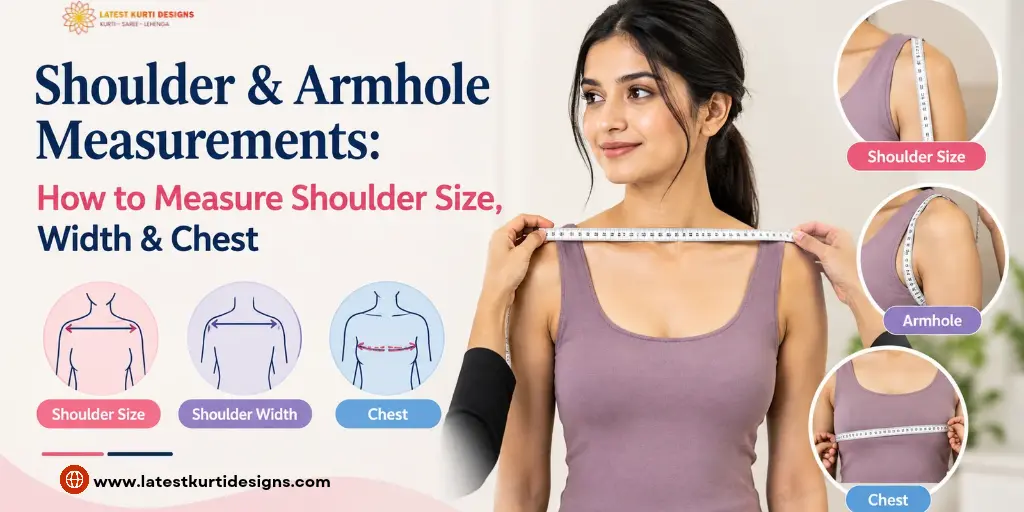
To measure your shoulder, chest, and armhole correctly, use a flexible measuring tape and follow the right steps. This helps you get the right size and stitch clothes that fit well. You can also take these measurements easily at home.
Nobody likes wearing clothes that are too tight or too loose. But do you know what matters most to get the perfect fit? It is taking the right body measurements. Even a small mistake while measuring your shoulder, chest, or armhole can affect how your clothes fit. The good news is that you do not need to be a stitching expert to get these measurements right. If you know how to measure shoulder size and other body parts correctly, you can avoid common fitting problems and get clothes that look and feel better.
- Why Shoulder and Armhole Accuracy Matters in Garment Making
Why Shoulder and Armhole Accuracy Matters in Garment Making
The right shoulder and armhole measurements help clothes fit well and make movement easier. They help avoid tight seams, unwanted wrinkles, and fabric pulling around the chest and back. Moreover, the right shoulder measurement also helps the fabric fall smoothly and gives the garment a clean shape.
These measurements are important when stitching kurtis, blouses, shirts, and dresses. A properly measured armhole makes it easy to move your arms, while the right chest measurement helps the clothes fit well around your upper body.
Tools You Need to Take Body Measurements
You only need a few basic tools to measure your body correctly at home. These tools help you measure your shoulders, armholes, and chest correctly.
- Soft Measuring Tape: Use a flexible cloth or plastic tape to measure body curves without hurting your skin or getting incorrect readings.
- Notebook and Pencil: Write down each measurement as soon as you take it so you do not forget the numbers.
- Full-Length Mirror: Use a mirror to check that the measuring tape is straight and stays level around your body.
- Ribbon or Elastic (Optional): Tie it around a specific body area when you need a clear reference point while measuring.
Keep these tools ready before you start. You can record your measurements in a body measurements chart to make them easy to find when stitching clothes or checking clothing sizes.
A Complete Guide to Shoulder, Chest, and Armhole Measurements
Before taking any measurements, it is important to know which body points to measure and where to place the tape. The following steps explain each measurement separately, so you can follow them easily and note down the correct numbers.
What Is Shoulder Measurement?
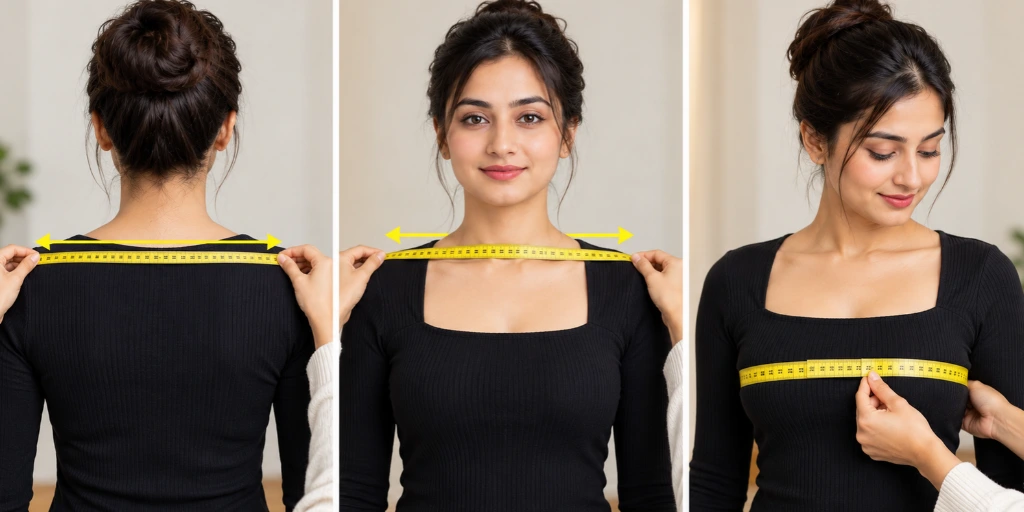
Shoulder measurement is the straight distance across the upper back from the top of one shoulder to the tip of the other. Knowing how to measure shoulder width helps you find the correct shoulder size for stitching clothes and choosing the right fit.
Shoulder measurements are divided into three main types.
- Body Shoulder Width: This measures the distance between the two shoulder points on your body. It is also called shoulder-to-shoulder measurement and helps tailors understand your natural shoulder width.
- Garment Shoulder Width: This measures the distance between the shoulder seams of a shirt, kurti, or dress. It may differ from your body measurement depending on the clothing style and fit.
- Shoulder Length: This measures one side of the shoulder, from where the neck meets the shoulder to the outer tip. It helps tailors place the shoulder seam correctly when stitching clothes.
A shoulder measurement chart helps you compare your measurements with standard clothing sizes. However, the right size can change between brands and garment styles.
How to Measure Shoulder Size and Width Correctly
Measuring your shoulders correctly helps you find the right fit when stitching or buying clothes. Follow these easy steps to measure your shoulders correctly at home.
- Stand Straight in a Relaxed Position: Stand straight with your back relaxed and your shoulders in their natural position. Avoid bending forward or pushing your chest out, as this may affect the measurement. Wear a thin, well-fitted top or measure directly over your skin.
- Find the Shoulder Point: Find the outer top of each shoulder, where the shoulder bone ends. These points are usually close to where the shoulder seam sits on a well-fitted shirt or kurti.
- Measure from One Shoulder to the Other: Place the measuring tape at the tip of one shoulder and stretch across your upper back to the other shoulder tip. Keep the tape level and avoid pulling it too tightly. This is called the shoulder-to-shoulder or cross-back measurement. It explains how to measure shoulder width correctly.
- Record Your Shoulder Width: Write down the measurement in inches or centimetres. If you are measuring for stitching, use the same method each time to avoid differences. You can compare your result with a shoulder measurement chart, but remember that clothing sizes may change by brand and style.
What Is Chest Measurement?
Chest measurement is the distance around the fullest part of your chest or bust, usually recorded in inches or centimetres. It helps you choose the right size for shirts, kurtis, jackets, and dresses. An accurate chest measurement makes it easier to find clothes that fit comfortably without being too tight or too loose.
How to Measure Chest Size at Home
- Use the Right Tools: Use a soft, flexible measuring tape to measure around your chest.
- Wear Suitable Clothing: Measure over your bare skin or a thin, fitted top. Women should wear a well-fitting bra if needed.
- Place the Tape Correctly: Wrap the tape around your back, under your arms, and across the fullest part of your chest or bust.
- Keep the Tape Level: Check in a mirror to make sure the tape stays straight and does not twist or sag at the back.
- Breathe Normally: Stand straight with your arms relaxed at your sides. Breathe normally and keep your chest in a natural position.
- Check and Record the Measurement: Keep the tape snug without squeezing your body. Note the number in inches or centimetres and compare it with a standard measurement chart to help choose the right clothing size.
What Is Armhole Measurement?
Armhole measurement refers to the size of the opening where the sleeve joins the main part of a garment. It helps tailors create sleeves that fit properly and allow easy arm movement. Correct shoulder measurement also helps keep the upper part of the garment balanced.
There are two main types of armhole measurements:
- Armhole Depth: This is the straight distance from the top of the shoulder down to the level of the armpit. It helps determine how high or low the armhole sits on the body.
- Armhole Circumference: This measures the distance around the armhole, starting at the shoulder, going under the armpit, and returning to the starting point. It helps ensure the opening is not too tight or too loose.
Both measurements are important when stitching kurtis, blouses, shirts, and dresses. You can record them in a body measurements chart to keep your measurements organised and make them easier to use when stitching clothes.
How to Measure Armhole Depth and Circumference
Correct armhole measurements help clothes fit comfortably around the shoulders and underarms. Follow these steps to measure the vertical depth and the full size of the armhole.
1. How to Measure Armhole Depth (Vertical)
- Start Point: Place the measuring tape at the top of the shoulder, near the shoulder tip or shoulder seam.
- Measure Straight Down: Measure vertically to the level of the armpit. Do not curve the tape tightly into the armpit.
- Record the Measurement: Note the result in inches or centimetres in your body measurements chart. This measurement helps determine how high or low the armhole sits and affects the sleeve position.
2. How to Measure Armhole Circumference (Around the Opening)
- Start Point: Place the measuring tape at the top of the shoulder, near the shoulder seam.
- Measure the Full Loop: Bring the tape down around the armhole, pass it under the armpit, and bring it back up to meet the starting point.
- Allow Enough Ease: Hold the tape close to your body without squeezing the skin. Allow a little extra room based on the garment type so the armhole does not feel restrictive.
- Record the Measurement: Write down the final measurement in inches or centimetres for use when stitching the garment.

Need Help Finding the Right Design?
We’re here to assist you.


Common Mistakes to Avoid When Taking Measurements
Small mistakes while taking body measurements can affect how your clothes fit. These tips will help you avoid common measurement mistakes.
- Measuring Over Thick Clothing: Wear a thin top or measure directly over your skin to avoid incorrect readings.
- Keeping the Tape Too Tight or Loose: Keep the tape close to your body without squeezing your skin or leaving extra space.
- Standing Incorrectly: Stand straight with relaxed shoulders. Slouching or raising your shoulders may affect your shoulder measurement.
- Choosing the Wrong Shoulder Points: Measure from the outer tip of one shoulder to the other when checking shoulder width.
- Mixing Up Armhole Measurements: Remember that armhole depth is measured vertically, while armhole circumference goes around the opening.
- Not Recording Measurements: Write down each number clearly and check your chest measurement before using it for stitching.
How to Use a Body Measurement Chart
A body measurements chart helps you keep your measurements organised and choose the right clothing size. Follow these simple steps to use it correctly.
- Take Your Body Measurements: Use a soft measuring tape to measure your shoulders, chest, waist, and other required areas.
- Write Down the Numbers: Record each measurement in inches or centimetres in the correct place on the chart.
- Check the Size Chart: Compare your measurements with the sizes listed in the chart to find the closest match.
- Check Each Measurement Separately: Your chest may fit one size while your shoulders fit another. Therefore, compare the important measurements instead of relying on just one number.
- Consider the Clothing Style: Fitted clothes and loose-fitting clothes need different amounts of extra room, so consider the design before choosing a size.
- Recheck Before Stitching: Measure again if you are unsure about a number. Accurate measurements help you get a better fit and avoid unnecessary alterations.
Remember that sizes may differ between brands and tailoring methods. So, use the chart as a starting point and adjust the fit according to your needs.
Conclusion
Getting the right body measurements is important for clothes that fit well and feel comfortable. By measuring your shoulders, chest, and armholes correctly, you can avoid tight or loose-fitting clothes and get a better fit when stitching or buying outfits. So, keep your measurements written in a chart so you can check them whenever you need them. If you are looking for a platform where you can find your perfect fit, you can explore Latest Kurti Designs.
It is an online shopping platform where you can explore different kurti styles in different sizes. Our platform’s body measurement chart helps you compare your measurements with the size details and choose an outfit that fits you better. Check your measurements, explore the Latest Kurti Designs, and find the style and size that suit you best.
Also Read – 7 Trending Co-ord Sets for Women for Every Occasion
FAQs
1. How can I measure my shoulder size at home?
Use a soft measuring tape to measure across your upper back, from one shoulder tip to the other. Keep your shoulders relaxed and record the measurement.
2. How do I measure my shoulder width by myself?
Stand in front of a mirror and measure across your back from one shoulder tip to the other. Keep the tape straight for a more accurate result.
3. How do I measure my chest size at home?
Wrap a measuring tape around your back and across the fullest part of your chest. Keep it straight and snug without pulling it too tightly.
4. How do I measure my armhole size?
Place the tape at the top of your shoulder, take it around the armhole and under your armpit, then return to the starting point.
5. How do I know my correct body size for clothes?
Measure your shoulders, chest, waist, and hips with a measuring tape. Compare these numbers with the clothing brand’s size chart to find your suitable size.