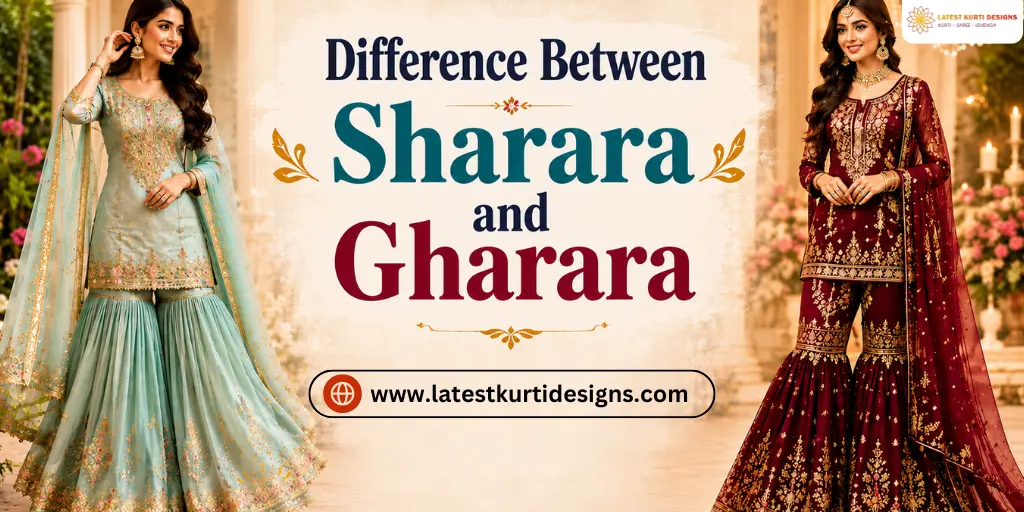
Both shararas and ghararas are traditional South Asian outfits worn with a long top and scarf. A sharara is wide and loose from the waist and looks flowy like a skirt. A gharara fits on the waist and thighs, but becomes very wide from the knees. Therefore, the main difference is where the flare starts, which makes each outfit look different.
Sharara and gharara are traditional South Asian outfits that look similar but are different in style and design. Both are worn with a long tunic and scarf for special functions like weddings and festivals. The main difference is in their shape and flare. Therefore, understanding the main difference between gharara and sharara helps you easily identify each outfit and choose the right one for the event.
What Is a Sharara?
A sharara is a traditional outfit that looks like a long, loose skirt but is actually a wide pant. It looks very pretty and stylish and is worn on special occasions like weddings and festivals.
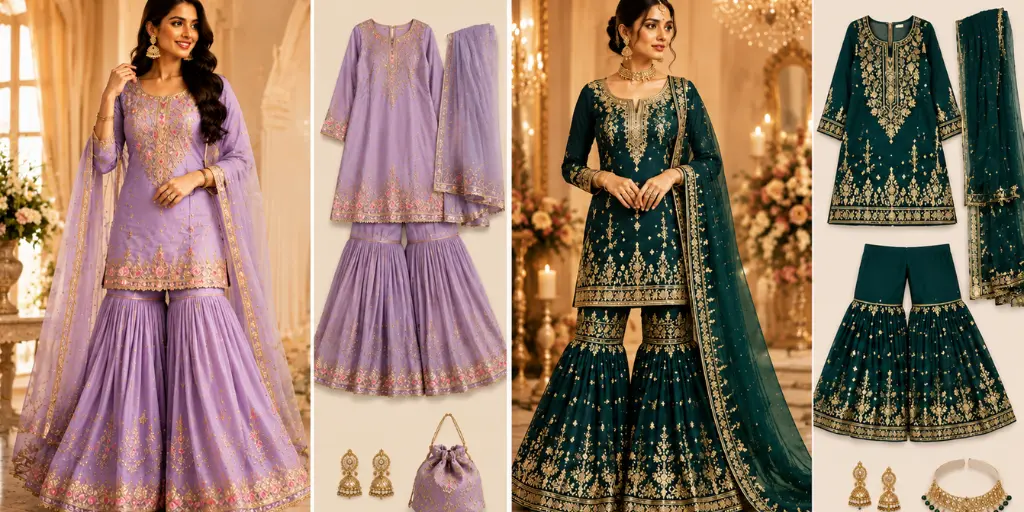
- Design and Structure of Sharara: A sharara is tight at the waist and becomes very wide from top to bottom. It flows like a skirt but is made like pants, which gives it a beautiful and elegant look.
- Wearing Style of Sharara: A sharara is worn with a kurti (top) and a dupatta (scarf). It is mostly worn at weddings, parties, and festivals for a traditional and stylish look.
- Fabric and Styling Options: Shararas are made from soft fabrics like silk, cotton, chiffon, or georgette. They can be simple or decorated with embroidery and designs. People wear them with jewelry and matching accessories to look more beautiful.
What Is a Gharara?
A gharara is a traditional outfit that looks similar to a sharara but has a different shape. It is worn for weddings and special occasions and given a rich, elegant, and traditional look.
- Design and Structure of Gharara: A gharara is fitted at the waist and thighs. It becomes very wide from the knees, which gives it a special and stylish shape. This knee flare is what makes it different from a sharara.
- Wearing Style of Gharara: A gharara is worn with a kurti (top) and dupatta (scarf). It is mostly worn at weddings, festivals, and family functions. It gives a traditional and graceful look when styled properly.
- Fabric and Styling Options: Ghararas are made from fabrics like silk, georgette, chiffon, and cotton. They can be simple or heavily decorated with embroidery and designs. People style them with jewelry, bangles, and matching accessories for a complete festive look.
Key Differences Between Sharara and Gharara
Sharara and gharara look similar but are different in shape, fit, and style. Therefore, understanding the difference between gharara and sharara helps you easily identify both outfits and choose the right one.
- Shape and Fit Difference: A sharara is loose and wide from the waist, like a flowy skirt. A gharara is fitted at the waist and thigh, so it looks more shaped and structured.
- Where the Flare Starts: In a sharara, the flare starts from the waist and flows evenly to the bottom. In a gharara, the flare starts from the knees, which gives it a special layered look.
- Style and Look Differences: A sharara looks simple, modern, and flowy. A gharara looks more traditional, royal, and elegant because of its fitted and flared design.
- Comfort and Movement: Shararas are very comfortable, as they are loose from top to bottom, which makes them easy to move in. Ghararas are slightly fitted on top but still comfortable for weddings and special events.
- Occasions to Wear: Shararas are often worn at parties, festivals, and wedding functions for a trendy look. While ghararas are mostly chosen for traditional weddings and cultural celebrations for a classic style.
Sharara vs. Gharara: Quick Comparison Table
Here is a simple comparison to help you understand the difference between gharara and sharara easily.
| Feature | Sharara | Gharara |
| Shape | Wide and flowy from the waist | Fitted at the waist and thighs |
| Flare Start | From the Waist | From knees |
| Look | Modern and simple | Traditional and royal |
| Comfort | Very comfortable and loose | Slightly fitted but elegant |
| Style | Flowing skirt-like look | Structured and divided look |
| Occasions | Parties, festivals, weddings | Weddings and traditional events |
When to Wear Sharara
A sharara is a stylish traditional outfit that is perfect for many happy occasions. It looks elegant and gives a festive feel. Therefore, understanding the difference between Gharara and Sharara also helps you pick the right outfit for the right moment.
- Weddings and festivals: Shararas are commonly worn at weddings and big festivals. They give a bright and beautiful look. These are perfect for celebrations.
- Parties and special occasions: These are a good choice for parties, birthdays, and special events where you want to look stylish and traditional.
- Family functions and gatherings: Shararas are also worn at family get-togethers, where people like to dress in ethnic and comfortable outfits.
- Engagement ceremonies: Many people choose shararas for engagements because they look elegant and not too heavy.
- Traditional celebrations like Eid and Diwali: These outfits are perfect for festivals like Eid and Diwali, as they match the festive mood.
- Cultural events and school functions: Shararas are also worn in cultural programs, dance events, and school functions for a graceful ethnic look.
When to Wear a Gharara
A gharara is a traditional and elegant outfit that is mostly worn on special cultural and festive occasions. It gives a royal and classic look, which makes it a good outfit for grand celebrations. When comparing Sharara vs Gharara, a gharara is often preferred for its rich and traditional appearance. Therefore, understanding the difference between Gharara and Sharara helps you choose the right outfit for the right event.
- Traditional functions: Ghararas are often worn at traditional family functions and festivals. It gives a rich and cultural look that suits special celebrations.
- Cultural events: This outfit is also worn in cultural programs, dance performances, and heritage events where traditional dressing is preferred.
- Bridal events: Ghararas are a popular choice for brides and close family members during weddings, as they look elegant and royal.
- Wedding ceremonies: These are commonly worn at wedding functions like mehendi, sangeet, and receptions for a graceful ethnic style.
- Religious celebrations: Ghararas are also chosen for religious and festive occasions where traditional wear is important.
Styling Tips for Sharara and Gharara
Sharara and gharara both look very beautiful when styled in the right way. Simple styling can make your outfit look more elegant and complete. Therefore, knowing the Difference Between Gharara and Sharara can help you style your outfit better.
- Accessories: Wear light or heavy jewelry depending on the outfit. For shararas, simple earrings or bangles look good, and for ghararas, traditional jewelry like jhumkas and necklaces look good.
- Footwear: Heels or traditional juttis are the best choice for both Shararas and Ghararas. Heels add height and elegance, while juttis give a comfortable ethnic look for both outfits.
- Makeup and hairstyle: Soft makeup with kohl eyes and light lip shades looks good. You can keep your hair open in soft curls or tie it in a bun for a more traditional look.
Conclusion
Sharara and gharara look similar, but they have different designs and styles. A sharara is loose and flowy from the waist, while a gharara is fitted at the thighs and flares out from the knees. Therefore, understanding the difference between gharara and sharara can help you choose the right outfit for weddings, festivals, parties, and other occasions.
If you enjoy wearing ethnic outfits, Latest Kurti Designs can help you find beautiful shararas, ghararas, kurtis, and other traditional wear. Our platform offers stylish and comfortable designs for both daily wear and special events. Therefore, you can explore many ethnic outfits that suit different styles and budgets. You can visit our platform to find your favourite traditional wear in a simple and convenient way.
Also Read – Top Ethnic Wear Buying Mistakes Every Woman Should Avoid